Why Plants Die in UAE Gardens: The Hidden Chemistry
Every week, our horticultural consultancy receives calls from perplexed villa owners across Dubai and Abu Dhabi. They have spent thousands on lush flowering hibiscus, frangipani, jasmine, and citrus trees from local nurseries, only to watch the foliage turn yellow, develop crispy brown leaf margins, and slowly defoliate within two to three months.
The immediate homeowner reaction is almost always: "It must be the heat, or I am not watering enough." In response, they double the daily irrigation schedule — which inadvertently accelerates plant death through root suffocation.
The true culprit is beneath the surface. Native UAE ground is not "soil" in the biological sense; it is raw marine and desert sand characterized by three severe physiological barriers:
- Severe Alkaline pH (8.0 to 8.8): Most ornamental and fruit-bearing plants evolve in slightly acidic to neutral soils (pH 6.0 to 7.0). In high-alkaline sand, critical micronutrients — especially iron (Fe), zinc (Zn), manganese (Mn), and phosphorus (P) — become chemically locked in insoluble mineral compounds. Even if nutrients are present, root hairs cannot absorb them (known as iron chlorosis).
- High Electrical Conductivity (Salinity): Native sand contains high concentrations of sodium chloride (NaCl) and calcium carbonates. High salinity creates negative osmotic pressure: instead of plant roots drawing water from the ground, the salty sand draws moisture out of the roots, causing cellular dehydration.
- Near-Zero Cation Exchange Capacity (CEC): Sand grains are large, inert silica quartz crystals with zero electrical charge and zero organic humus. They cannot hold water or dissolved nutrients; irrigation water simply drains straight down into the deep subterranean water table within minutes.
The Dangerous Fallacy of the "Sweet Soil" Shortcut
The standard practice among unskilled garden contractors in Dubai is straightforward: excavate a shallow pit in the sand, dump a truckload of red agricultural "sweet soil" (imported agricultural silt), stick the root ball in, and backfill. Within six months, the garden begins to fail.
"Dumping red sweet soil over unconditioned desert sand creates the notorious 'Bathtub Effect.' The dense, silty sweet soil sits on top of compacted, calcified desert hardpan. When irrigation runs, water hits the impenetrable subgrade, cannot drain, and pools around the root flare. The roots suffocate from lack of oxygen, fungal Phytophthora takes hold, and the plant rots from the bottom up."
— Priya Sharma, Senior Horticulturist, Yad Al Ma
True soil conditioning is not about burying roots in isolated pockets of silt; it is an engineering protocol that builds a living, aerated, well-draining biological ecosystem.
Yad Al Ma's 4-Step Scientific Soil Remediation Protocol
To ensure long-term botanical longevity, Yad Al Ma applies a proprietary 4-step soil remediation methodology before planting any villa project:
| Phase | Agronomic Action | Biological Outcome |
|---|---|---|
| 1. Leaching & Sub-Base Decompaction | Deep ripping of compacted subsoil to 600mm; heavy flush with low-salinity water. | Displaces accumulated soluble salts down below the active root zone; restores capillary oxygen flow. |
| 2. Organic Humus & Coir Incorporation | 30% blend of certified aged thermal compost, washed coconut coir pith, and volcanic perlite. | Increases moisture retention by 300%; coconut coir acts like a microscopic sponge holding hydration at root level. |
| 3. Biological Inoculation (Mycorrhizae) | Inoculation with beneficial Endomycorrhizal fungi strains and humic/fulvic acids. | Fungal hyphae attach to roots, expanding the effective root absorption surface area by up to 700%. |
| 4. Chelation & pH Buffering | Application of elemental agricultural sulfur and EDDHA Iron Chelate. | Gradually buffers root-zone micro-pH downward while providing bioavailable iron that will not lock in alkaline conditions. |
The Power of Organic Mulching: The 75mm Thermal Shield
In the UAE desert, direct solar radiation can heat bare surface sand to an astonishing 65°C by 1:00 PM in August. This extreme surface heat literally cooks shallow feeder roots within the top 15cm of soil and triggers rapid capillary evaporation, drawing deep underground salts straight up to form a white toxic crust on the surface.
The single most cost-effective protection against this phenomenon is Organic Wood Bark Mulching:
- 70% Reduction in Water Evaporation: A continuous 75mm layer of coarse pine bark or shredded hardwood mulch acts as a physical thermal barrier, shielding moist soil from direct UV rays and desiccating desert winds.
- 10°C Cooler Root Temperatures: Independent temperature testing demonstrates that mulched soil beds remain up to 10°C cooler at a 10cm depth compared to exposed bare sand beds.
- Weed Suppression & Organic Regeneration: Dense mulch prevents airborne weed seeds from establishing root contact. As the bottom layer of mulch slowly breaks down over 12 to 18 months, it feeds earthworms and beneficial soil microbes, creating dark, rich topsoil naturally.
Microclimate Architecture: The 3-Tier Canopy Strategy
In nature, desert flora does not grow in barren isolation. Plants create cooperative ecosystems where larger species protect smaller understory companions. In villa garden design, Yad Al Ma replicates this principle through 3-Tier Canopy Microclimate Architecture:
"If you plant a delicate gardenia or bougainvillea in the middle of an open, reflective white-stone patio under direct southern exposure, no amount of soil amendment will save it. You must design living canopy shade that creates its own self-cooling microclimate."
— Landscape Design Studio, Yad Al Ma
Our proven 3-tier layering framework includes:
- Tier 1: Upper Canopy (Overstory Shade Providers): Mature Date Palms (Phoenix dactylifera), indigenous Ghaf trees (Prosopis cineraria), and Delonix regia (Royal Poinciana) filter direct harsh sunlight, breaking the wind and casting gentle dappled shade across the garden.
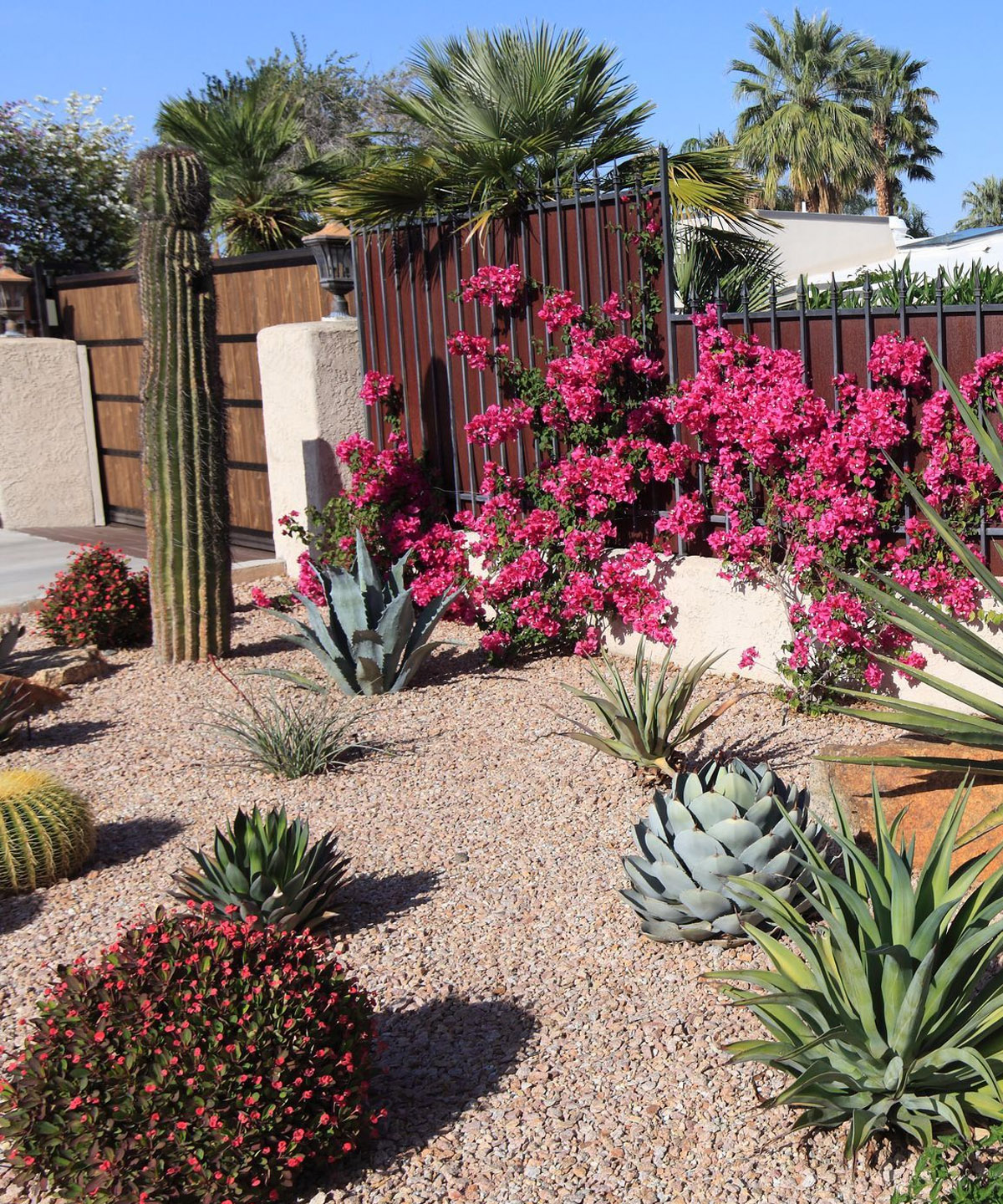
- Tier 2: Mid-Story (Flowering & Architectural Volume): Frangipani (Plumeria obtusa), Bougainvillea trellises, Tecoma stans, and Hibiscus rosa-sinensis thrive under the light shade of Tier 1, producing profuse blooms without leaf scorch.
- Tier 3: Understory Groundcovers (Living Soil Blankets): Carissa macrocarpa, Wedelia trilobata, Rhoeo discolor, and drought-hardy Agave attenuata cover the soil surface entirely, locking in soil moisture and dropping ground-level radiant heat by up to 8°C.
Seasonal Soil Feeding Protocols in Alkaline Environments
Standard synthetic N-P-K granular fertilizers sold in home improvement centers often worsen soil problems in the UAE by adding chemical salts to already saline ground. To keep your garden flourishing year-round, Yad Al Ma recommends an organic seasonal calendar:
- October (Post-Summer Recovery): Deep drenching with liquid humic acid and seaweed extract (kelp) to stimulate new root hair proliferation as nighttime temperatures drop below 28°C.
- November – January (Organic Top-Dressing): Apply a 25mm layer of fully composted organic manure blend to all planter beds, followed by a fresh top-up of pine bark mulch.
- March – April (Pre-Summer Conditioning): Application of EDDHA Iron Chelate (which remains chemically stable even up to pH 9.0) and slow-release magnesium sulfate to deepen green leaf chlorophyll ahead of summer heat stress.
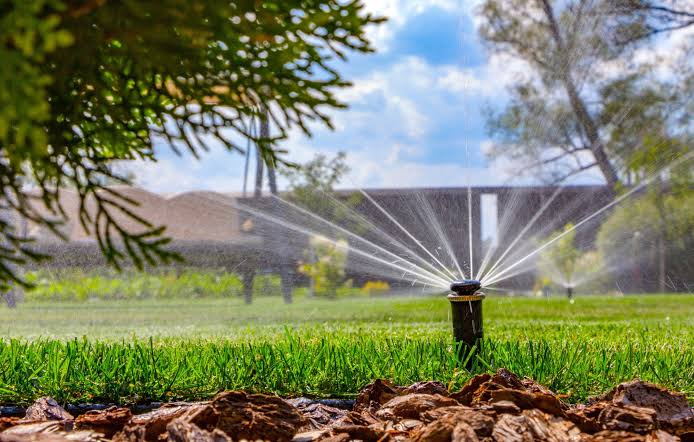
- June – August (Summer Stress Relief): Cease all heavy nitrogen fertilization. High nitrogen forces tender new vegetative shoots that burn instantly in 45°C air. Maintain deep drip irrigation early in the morning (5:00 AM) and supplement with monthly potassium silicate sprays to strengthen leaf cell walls against heat desiccation.